
How Art and Escort Services Intersect in Berlin's Creative Culture
 Dec, 20 2025
Walk through Berlin’s Kreuzberg or Neukölln on a Friday night, and you’ll see it: a woman in a tailored coat holding a sketchbook, waiting outside a gallery opening. She’s not there to network. She’s not there to sell. She’s there because her job is to be present-to listen, to respond, to embody a mood that no painting or poem can fully capture. This isn’t just about companionship. It’s about performance. About art.
Art Isn’t Just Painted on Canvas in Berlin
Berlin has always been a city where creativity bleeds into everyday life. Street murals turn alleyways into open-air museums. Abandoned factories become immersive theater spaces. And in the shadows of these spaces, a quiet but powerful intersection has formed between art and escort services. Not in the way you might expect. No one’s selling sex as a commodity in a red-light district sense. Instead, a growing number of escorts in Berlin are artists themselves-performance artists, poets, dancers, musicians-who use their work as a form of emotional and sensory expression.
Think of it this way: a painter spends hours mixing colors to evoke a feeling. An escort spends hours learning how to hold silence, how to make someone feel seen, how to respond to unspoken needs. Both are creating experiences. Both are selling presence. The difference? One is displayed in a gallery. The other is lived in a private apartment, a quiet café, or a rooftop at dawn.
From Studio to Suite: The Rise of the Artist-Escort
In 2023, a Berlin-based study by the Institute for Urban Culture surveyed 127 individuals working in independent escort services. Of those, 43% identified as practicing artists-visual artists, theater performers, or experimental musicians. Nearly 60% said they chose escort work because it offered flexibility to pursue creative projects. Unlike traditional jobs with fixed hours, escort work lets them travel for residencies, attend gallery openings, or spend weeks in the studio without financial panic.
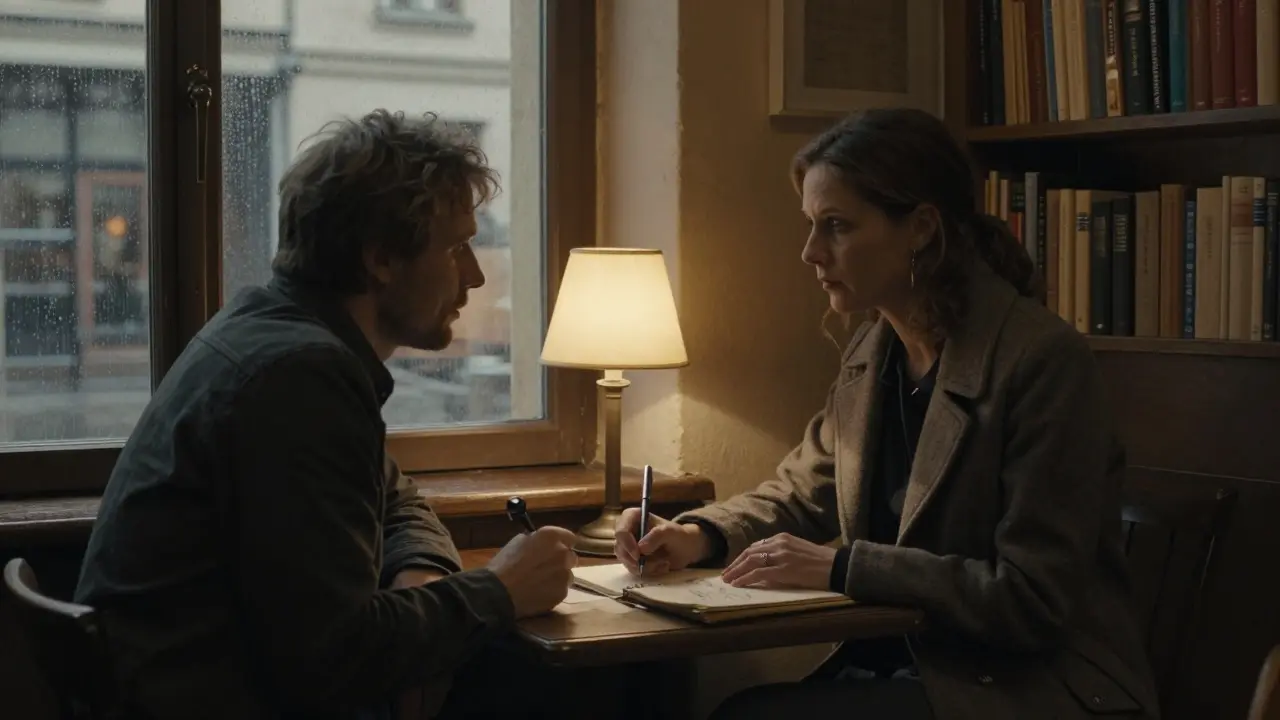
One such person, known publicly as Lina Voss, is a sculptor whose work has been shown at the Berlinische Galerie. She started offering companionship services after her studio rent doubled. She doesn’t advertise as an escort. She lists herself as a “cultural companion” on a private platform. Her profile reads: “I read Rilke aloud in dim light. I sketch you while you talk. I don’t perform. I respond.” Her clients? Mostly writers, curators, and retired academics. One told her he’d never felt understood until she sat with him for six hours, silent, just listening.

The Performance of Intimacy as Art
Berlin’s art scene has long embraced the idea that intimacy can be a medium. In 2021, artist Tabea Meier staged a piece called “The Hour Between” at the Hamburger Bahnhof. For 12 hours, she sat in a chair across from a single visitor at a time. No talking. No touching. Just eye contact. People paid €50 to sit with her. Some cried. Others didn’t say a word. The piece sold out. Critics called it “a quiet rebellion against digital isolation.”
That same year, a group of escort workers in Berlin launched “The Listening Project”-a private, invitation-only service where clients could book time with a trained companion who had studied psychology, theater, and narrative listening. The goal? To offer a space where people could speak without judgment, without agenda, without the pressure to be “fixed.” One participant, a 62-year-old German film editor, said, “I’ve had therapists. I’ve had lovers. But no one has ever just… been there without trying to change me.”
This isn’t therapy. It’s not sex work in the traditional sense. It’s performance art disguised as service. And it’s thriving because Berlin, more than any other city in Europe, allows space for ambiguity.
Why Berlin? Why Now?
Berlin’s legal framework for sex work is among the most progressive in the world. Since 2002, sex work has been decriminalized and regulated as a legitimate profession. Workers can register, pay taxes, and access healthcare. But what sets Berlin apart isn’t just the law-it’s the culture. There’s no stigma attached to choosing unconventional work if it aligns with your values. If you’re an artist who needs income that doesn’t compromise your creative freedom, escort work isn’t a last resort. It’s a strategy.
Compare this to Paris or London, where escort services are often hidden, stigmatized, or tied to exploitation. In Berlin, you’ll find escorts who teach yoga, run indie record labels, or publish zines. Their profiles don’t say “sexy” or “hot.” They say “I collect vintage typewriters,” “I write letters to strangers,” or “I can teach you how to make sourdough without a recipe.”
And clients? They’re not looking for a fantasy. They’re looking for authenticity. A 2024 survey by Berlin’s Cultural Economy Observatory found that 78% of clients seeking escort services in the city prioritized “emotional resonance” over physical attraction. The top three qualities listed: intelligence, presence, and the ability to hold space.
The Blur Between Client and Collaborator
Some of the most interesting developments in Berlin’s art-escort scene aren’t happening in private rooms. They’re happening in collaboration.
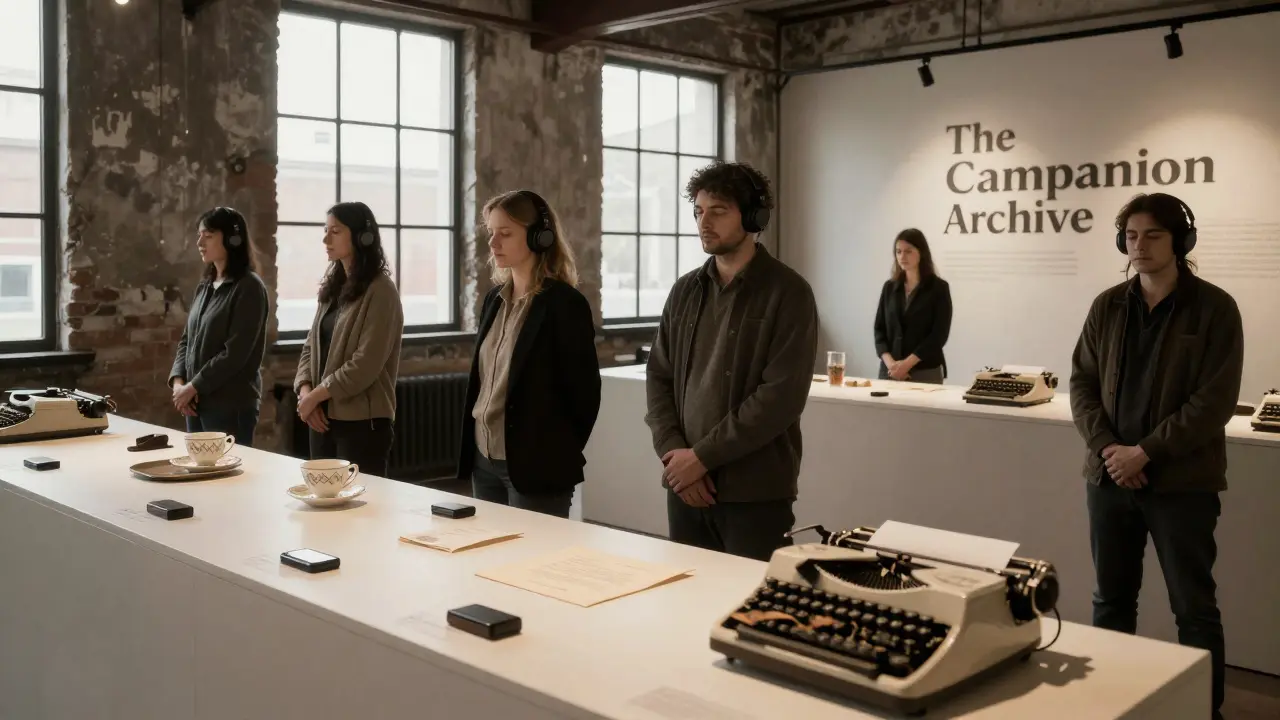
In 2024, a group of escort artists partnered with the Berlin University of the Arts to create “The Companion Archive”-a public exhibition of audio recordings, handwritten notes, and curated objects collected from 50 private encounters. Each entry was anonymized, but the emotions weren’t. One recording captured a client weeping as he described losing his wife. Another was a 10-minute silence, broken only by the sound of rain against a window.
The exhibition drew 12,000 visitors. Critics called it “the most honest portrait of urban loneliness in decades.” The artists behind it didn’t see themselves as victims or entrepreneurs. They saw themselves as documentarians.
One participant, a former ballet dancer turned companion, said: “People think we’re selling time. We’re not. We’re selling truth. And in a city that’s always performing-on stages, on social media, in politics-that’s the rarest commodity of all.”
What This Means for the Future of Work and Art
The line between art and labor is dissolving in Berlin. What was once seen as a transaction-money for time-is now being redefined as an exchange of human experience. This isn’t just about escort services. It’s about how we value emotional labor in a world that’s increasingly disconnected.
Other cities are watching. Amsterdam is testing similar programs. Barcelona has begun funding “empathy residencies” for artists in social care roles. But Berlin remains the epicenter-not because it’s the most liberal, but because it’s the most honest. It doesn’t pretend that intimacy can be commodified without consequence. It just lets people do it anyway, and calls it art.
If you visit Berlin and want to understand its soul, skip the museums for a night. Find a quiet café in Friedrichshain. Sit near someone who’s reading alone. Ask them what they do. They might say they’re a poet. Or a dancer. Or maybe, quietly, they’ll say: “I help people feel less alone.”
That’s the art of Berlin. And it’s not on display. It’s lived.
Are escort services legal in Berlin?
Yes. Since 2002, sex work has been fully legal and regulated in Germany under the Prostitution Act. Escorts can register as self-employed, pay taxes, and access social benefits. The law treats it as a legitimate profession, not a crime.
Do escort artists in Berlin offer sexual services?
Not necessarily. Many artists who work as companions focus on emotional connection, conversation, or shared experiences like walks, meals, or attending events. Sexual activity is optional and never assumed. Clients often seek presence, not physical intimacy.
How do you find a reputable escort artist in Berlin?
Most work through private, invitation-only platforms or referrals. Look for profiles that emphasize skills like listening, cultural knowledge, or creative interests rather than physical descriptions. Reputable individuals rarely use sensational language. Trust your instincts-authenticity is the main filter.
Is this trend growing in other cities?
Yes, but slowly. Cities like Amsterdam, Lisbon, and Portland have seen similar movements, but none have the same cultural infrastructure as Berlin. The combination of legal protection, low stigma, and a thriving underground art scene makes Berlin unique.
Can anyone become an escort artist in Berlin?
Anyone can enter the field, but success depends on emotional intelligence, boundaries, and authenticity. Many who thrive have backgrounds in psychology, theater, or social work. It’s not about being attractive-it’s about being present. Training programs and peer collectives exist to help newcomers navigate ethics and safety.