
Paris by Night: Best Food and Drinks After Dark in the City of Light
 Dec, 18 2025
Paris doesn’t sleep when the sun goes down-it just changes menus. While the Eiffel Tower sparkles and the Seine glows under soft lights, the real magic happens in the kitchens, bistros, and hidden bars where the city’s soul is served on a plate. Forget the tourist traps with overpriced croissants and fake French accents. The true Paris by night is found in the clink of wine glasses, the sizzle of garlic butter in a tiny alleyway bistro, and the quiet hum of conversation between strangers who become friends over a shared bottle of Beaujolais.
Where the Locals Eat After 10 PM
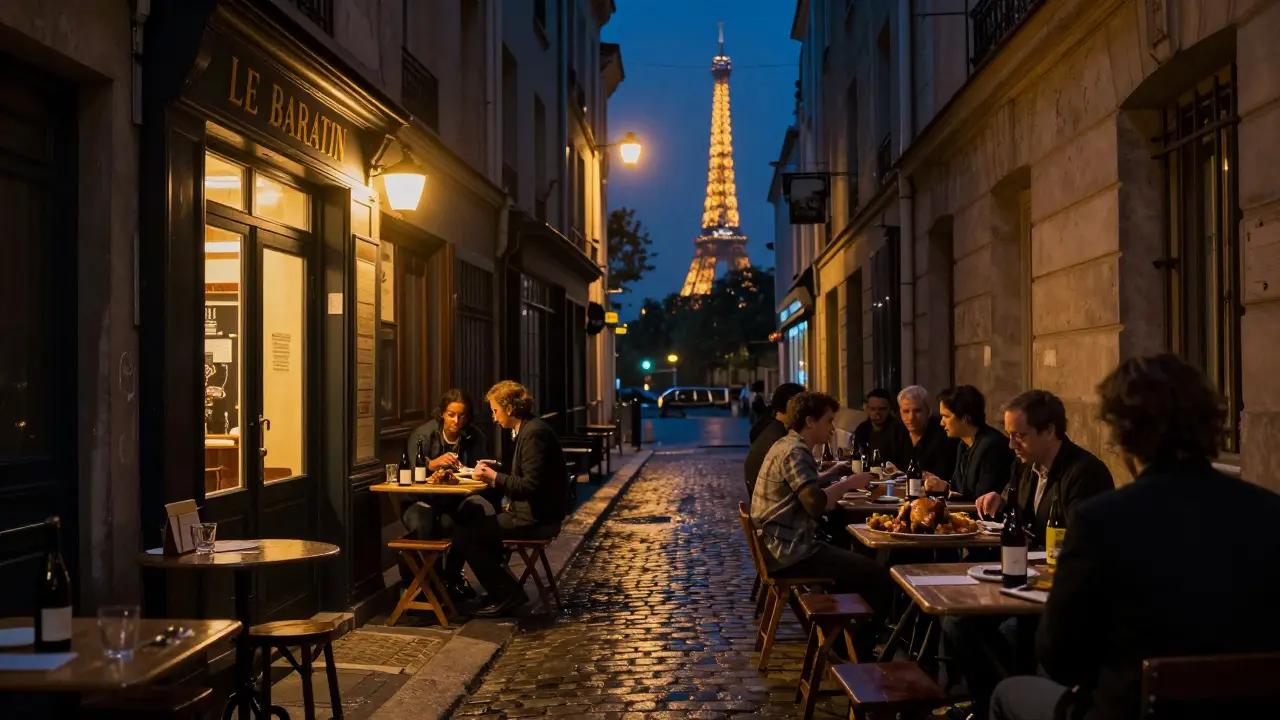
If you want to eat like a Parisian after dark, you need to know where they go. Tourist guides will send you to Le Comptoir du Relais or Septime, but those places book up months in advance and cost more than a night at a hotel. The real insiders head to places like Le Baratin in the 20th arrondissement. It’s unmarked, no website, and the menu changes daily based on what the chef finds at the market that morning. You’ll sit at a wooden table next to a nurse from the nearby hospital and a retired baker from Lyon. The food? Simple. Perfect. A plate of roasted chicken with crispy skin, seasonal greens, and a glass of natural wine for under €25.
Down in the 11th, La Belle Hortense is a wine bar disguised as a bookstore. You pick a bottle from the shelves, grab a small plate of aged cheese or charcuterie, and settle into a corner with a novel. The staff don’t speak much English, but they’ll point to what’s good that night. Their house-made pâté with pickled onions is the kind of thing you dream about for weeks after you leave.
The Midnight Snack Culture That Defines Paris
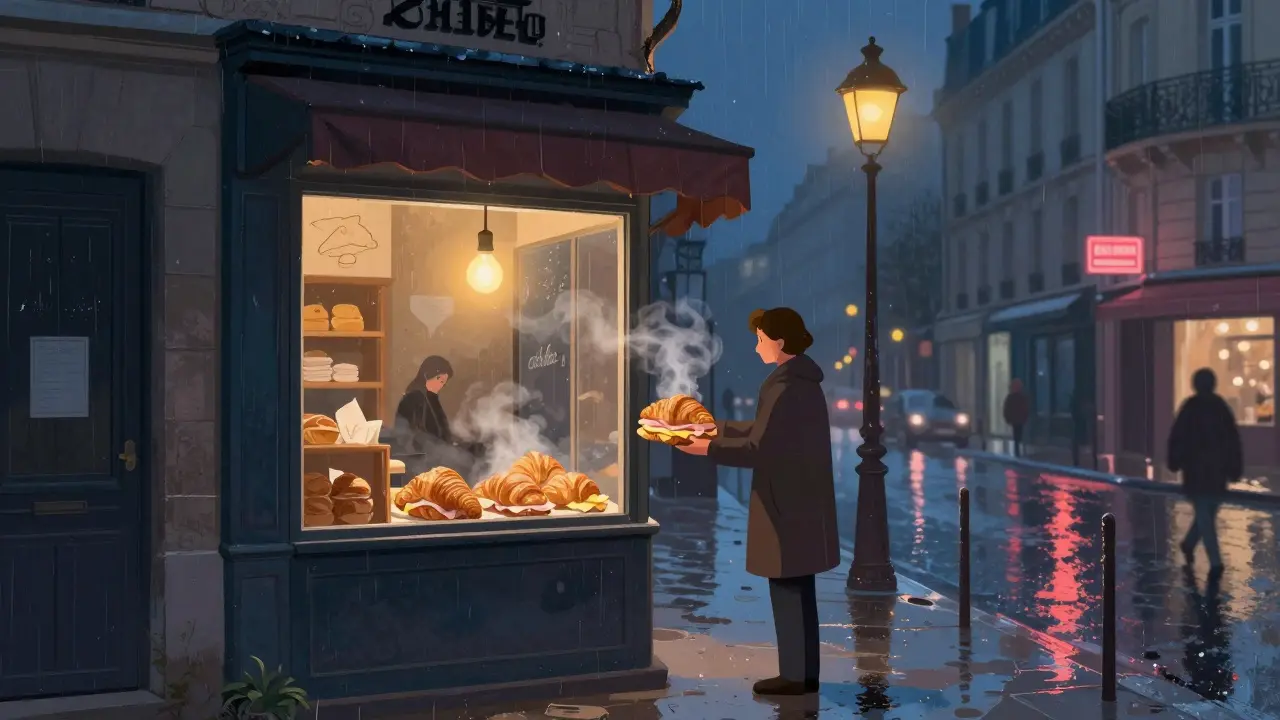
Parisians don’t wait for dinner to be over before they think about the next bite. At 1 AM, when most cities are quiet, Parisians are lining up at Le Petit Châtelet for a warm, buttery croissant sandwich stuffed with ham and Gruyère. It’s not fancy. It’s not Instagrammable. But it’s the best thing you’ll eat after a night out. The owner, Michel, has been making these since 1987. He doesn’t take reservations. He doesn’t have a website. He just opens at 11 PM and closes when the last customer leaves.
Head to the 13th arrondissement and you’ll find La Fontaine de Mars, a 24-hour crêperie tucked under a train bridge. The batter is made fresh every hour. The fillings? Classic ham and cheese, or wild mushrooms with thyme and crème fraîche. They serve it with a side of hot chocolate that’s thick enough to stand a spoon in. Locals call it the cure for bad decisions.
Wine Bars That Don’t Take Reservations (And Why That’s a Good Thing)
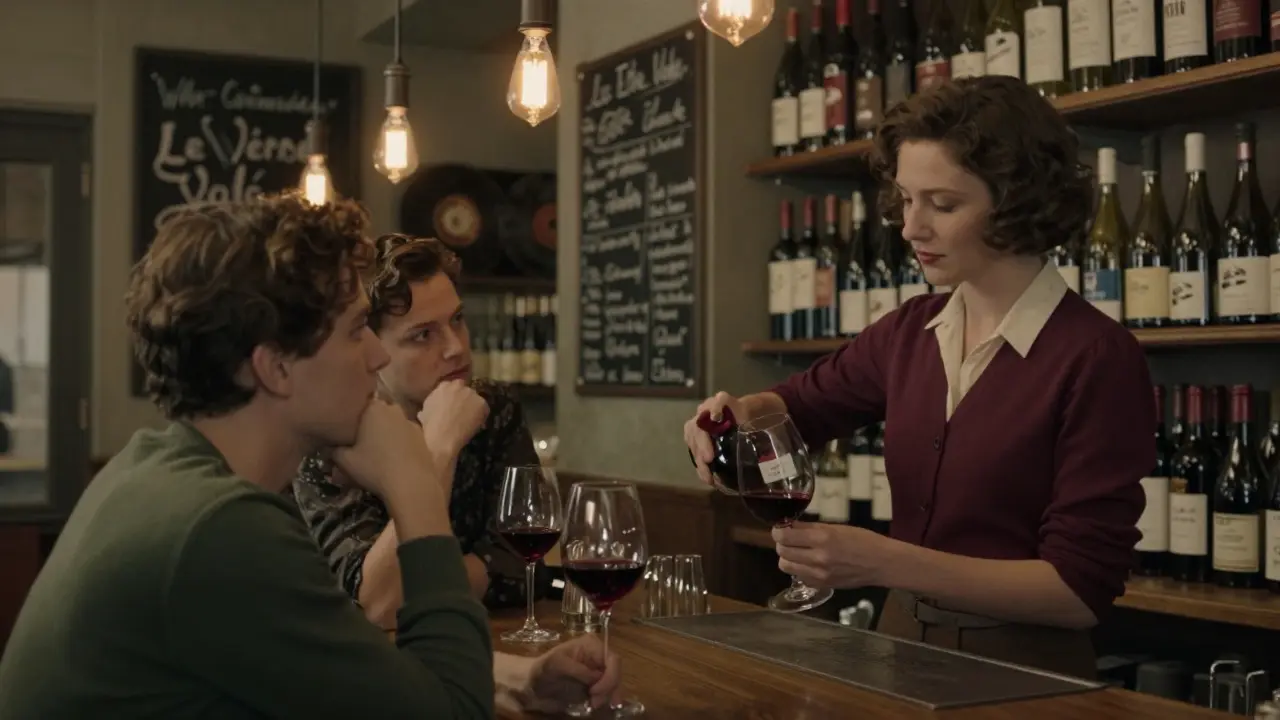
Paris has over 1,200 wine bars. Most of them are terrible. But the good ones? They’re quiet, intimate, and run by people who’ve spent their lives tasting and learning. Le Verre Volé in the 10th is one of them. The owner, Caroline, imports small-batch wines from obscure regions in the Loire Valley and Jura. She doesn’t label them by grape-she labels them by feeling: "Earthy," "Bright," "Like walking through a forest after rain." You tell her what you’re in the mood for, and she pours you a taste. No menu. No prices on the board. Just trust.
At Le Chateaubriand, the wine list is handwritten on a chalkboard behind the bar. The food is even more surprising: duck confit with black garlic, or cod with fermented cabbage and hazelnuts. The chef, Romain, used to cook in New York. He came back to Paris because he realized the city’s best meals happen when no one’s watching. The average bill? €45. The memory? Lasts forever.
Bars Where the Music Isn’t the Main Attraction
Paris isn’t known for loud clubs. It’s known for places where you can talk. Le Perchoir on the roof of a building in the 20th offers skyline views and a cocktail menu that changes weekly. Their signature drink? "L’Ombre du Louvre"-a mix of gin, elderflower, and smoked salt. It’s served in a glass that’s been chilled with dry ice. The vibe? Calm. Sophisticated. No DJs. No flashing lights. Just the sound of laughter and the clink of ice.
For something more underground, try Bar de l’Horloge in the 1st arrondissement. It’s hidden behind a bookshop, and the only sign is a small brass clock above the door. Inside, the walls are lined with vintage vinyl. The bartender plays jazz from the 1950s on a turntable. You can order a classic Old Fashioned or a French 75, but you’ll probably end up talking to the guy next to you about his trip to Provence or why he quit his job in finance to open a bakery.
The Secret Rules of Parisian Night Eating
There are unwritten rules here. Break them, and you’ll stand out-for the wrong reasons.
- Don’t ask for ketchup. It doesn’t exist in French kitchens after dark.
- Don’t rush. Meals last two hours. That’s not slow service-it’s the point.
- Don’t order dessert unless you’re willing to share. Portions are small, and everyone eats together.
- Don’t tip. Service is included. A simple "Merci" is enough.
- Don’t ask for a table by the window. In Paris, the best seats are the ones nobody notices until they’re taken.
And one more thing: never eat alone at 2 AM unless you’re ready to be invited to join someone else’s table. Parisians don’t believe in solitary dining after dark. Food is meant to be shared. Conversation is meant to be slow. And the night? It’s meant to be lived.
What to Skip (And Why)
There are plenty of places that look like they belong in Paris-but don’t. Avoid the restaurants near Notre-Dame that have menus in six languages and waiters who say "Bonsoir" with a smile that doesn’t reach their eyes. Skip the "French cuisine" spots that serve steak-frites with a side of plastic baguettes. And don’t waste your time at the overpriced champagne bars on the Champs-Élysées. The bubbles there cost €18 a glass, and no one actually likes the taste.
The real Paris doesn’t advertise. It doesn’t need to. It’s in the quiet corner of a street you didn’t know existed. It’s in the smell of fresh bread at 11:30 PM. It’s in the way the lights reflect off the wet cobblestones after a rain.
What’s the best time to start a night out in Paris for food?
Start around 9 PM. Most places don’t fill up until 10, and by 11, you’ll get the best tables. If you’re after late-night snacks, aim for 1 AM-when the real locals are just getting started.
Can you eat well in Paris on a budget after dark?
Absolutely. Many wine bars offer small plates for €8-€12. A croissant sandwich at Le Petit Châtelet costs €5.50. A glass of natural wine runs €7-€10. You can have a full, unforgettable meal for under €30 if you know where to look.
Are reservations necessary for Parisian night spots?
For the big-name restaurants, yes. For the hidden gems? Never. Many of the best places don’t even take phone calls. Just show up. Wait a few minutes. The host will find you a seat. That’s part of the charm.
Is Paris safe to explore at night for food?
Yes, if you stick to well-lit streets and avoid isolated parks after midnight. The 1st, 5th, 6th, 10th, and 11th arrondissements are especially safe and full of great spots. Use the metro-it runs until 1:15 AM on weekdays and 2:15 AM on weekends.
What’s the one dish you must try in Paris at night?
The croissant sandwich from Le Petit Châtelet. It’s simple, warm, buttery, and perfect after a long night. Locals eat it standing up. Tourists take photos. Both are right.
What Comes Next After the Last Bite
Paris doesn’t end when the last glass is drained. The city lingers-in the taste of salt on your lips, in the echo of a French phrase you didn’t understand but still smiled at, in the way the streetlights look softer now that you’ve been here longer. You won’t remember the name of every restaurant. But you’ll remember how it felt to eat like a local-slow, unscripted, and full of quiet joy.
Come back next year. Try a different arrondissement. Find a new bar. Let someone invite you to their table. That’s how you learn Paris-not by checking off spots on a list, but by letting the night lead you where you didn’t plan to go.